Skip to content

Cart

Your cart is empty

Article: How to dress your baby through the seasons: how many layers does your baby need?

Hoe je baby aankleden tijdens verschillende seizoenen: hoeveel laagjes heeft je baby nodig?
Product guides

How to dress your baby through the seasons: how many layers does your baby need?

What should your baby wear in each season? Especially as babies can't yet regulate their own temperature very well, it's only natural to have doubts sometimes. Luckily, a few simple guidelines make it much easier to choose what suits the season, the time of day and the temperature.

In this blog, we'll take you through it step by step.

How do you know if your baby is too warm or too cold?

Before you look at layers or temperatures, it's important to know how to “read” your baby properly.

Your baby's neck is the best indicator:

  • Does the neck feel warm and clammy? Then your baby is probably too warm
  • Does the neck feel cool? Then an extra layer may be needed
  • Cold hands or feet don't tell you much, as they're often colder than the rest of the body

Also look out for signs such as restlessness, sweating or, on the other hand, a pale and quiet baby.

Before you read on: every baby is different, and what works well for most babies may feel slightly different for your little one. Garments differ too; a jacket, for example, can be a little thicker or thinner than you'd think at first glance. The examples in this blog are mainly intended as a guide.

Why do layers work so well for babies?

Layers are ideal because you can easily adjust them when the temperature changes. Especially in the Netherlands, where the weather changes quickly.

A good basis often consists of:

  • a soft base layer against the skin
  • an insulating layer for warmth
  • a protective outer layer against cold or wind

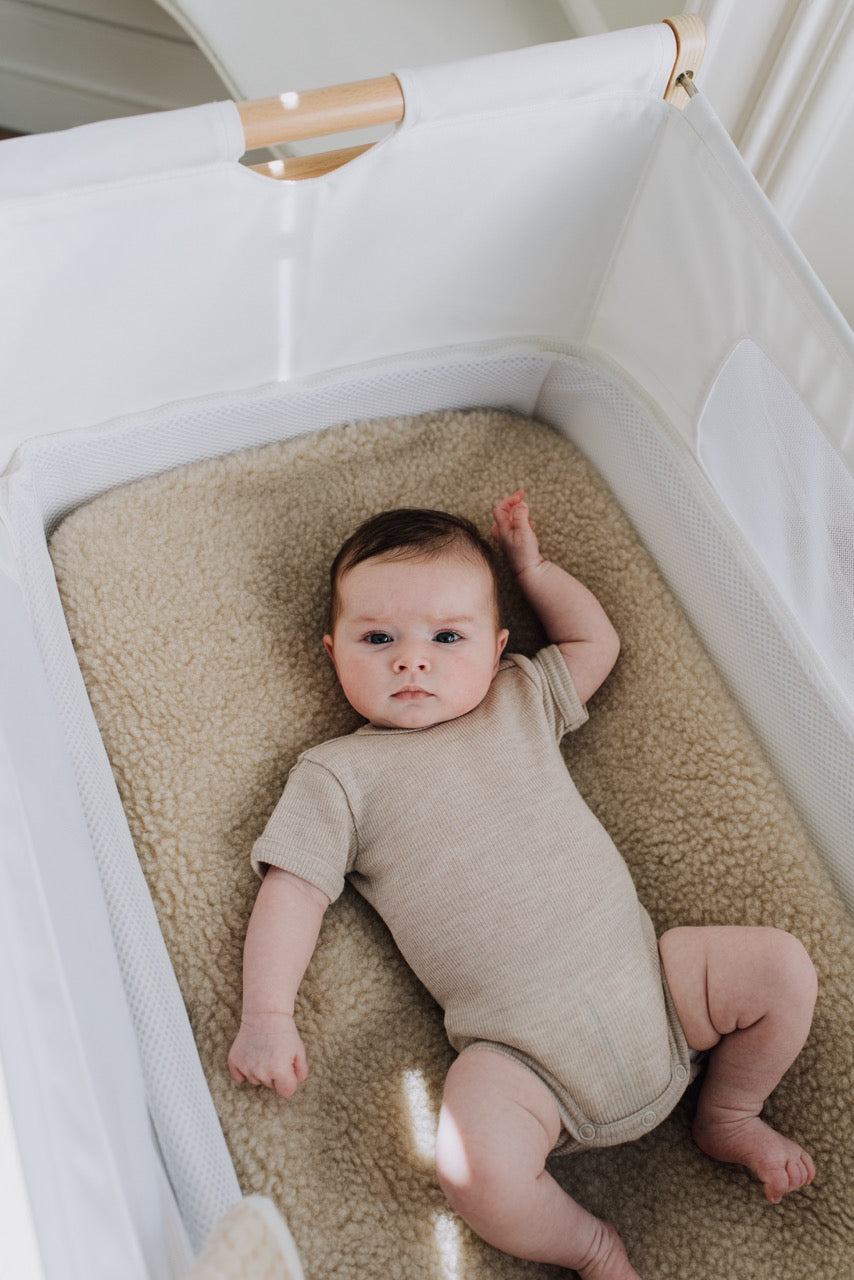
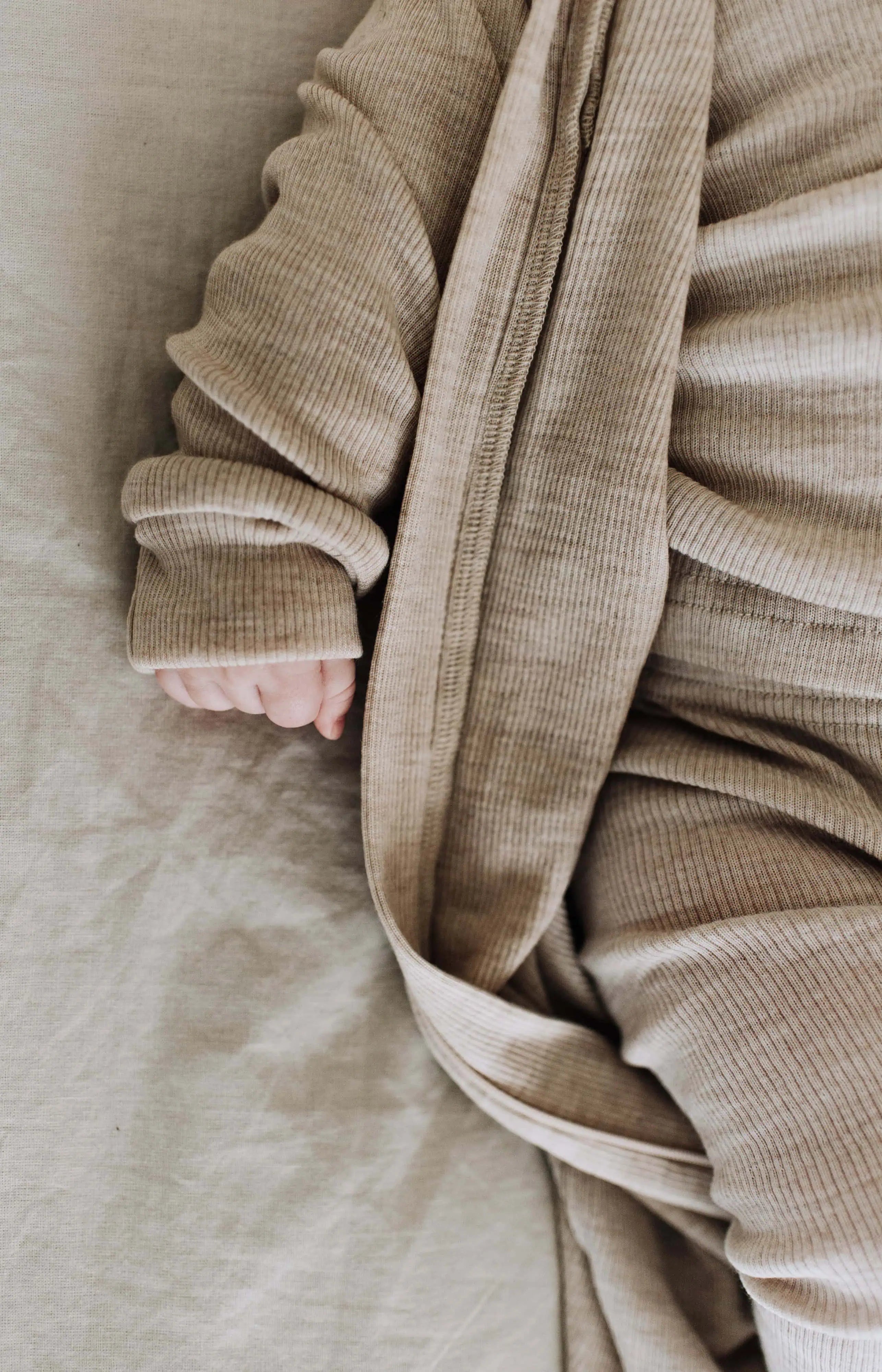
A natural material such as merino wool helps even more here, because it adapts to your baby's body temperature. It keeps your baby warm when needed, draws heat away when it's warmer and never feels stuffy.

This is the layer worn directly against your baby's skin. The base layer wicks away moisture (such as sweat) and helps the body stay dry and comfortable.

The main job of the warmth layer is to hold in body heat. This layer is usually insulating and is worn over the base layer. For example, a sleepsuit or a wrap top and leggings combination.

The outer layer protects against the elements such as wind, rain and cold. This layer is often windproof and waterproof, but it should also be breathable. Think of a jacket or an all-in-one suit. In winter, add a hat, mittens and scarf.

This is an additional layer you can add to the different layers. Think of our footmuff, (knitted) blankets, swaddle blanket, or underlay in the pram.

Je baby aankleden in de winter, lente, zomer en herfst

As well as temperature, you can also think in seasons. This is especially helpful when you want to quickly work out what's practical.

Summer: airy fabrics and minimal layers

Spring: changeable temperatures, so layers are important

Autumn: often chilly and damp, add an extra warm layer

Winter: warmth and protection from the cold come first

Even so, temperature should always take priority over the season.

How should you dress your baby at different temperatures?

Below you'll find a practical guide for each temperature range. It helps you judge what to dress your baby in through the different seasons and changes in temperature.

Wol als natuurlijke temperatuurregelaar

Wool helps your baby stay in balance naturally, without you constantly having to switch between thick and thin clothing. That's why wool is often used in baby essentials such as swaddle blankets and footmuffs.

Wool:

  • Breathes
  • Is protective
  • Retains warmth when it's cold
  • Releases heat when it's warm
  • Feels soft and comfortable on the skin

Want to know all about wool? You can read more about it here.

OUR MISSION

When we became parents ourselves, we discovered how special merino wool is: soft, breathable, temperature-regulating and so kind to delicate baby skin. Qualities every little one deserves.

That's why we lovingly make products that are not only comfortable and safe for your baby, but also sustainable and timeless.

FAQ

Frequently asked questions